Bermondsey Area Guide – For Buyers, Tenants & I...
Bermondsey is one of inner London's most compelling postcodes right now - and it's changing fast. From the thriving craft breweries along...

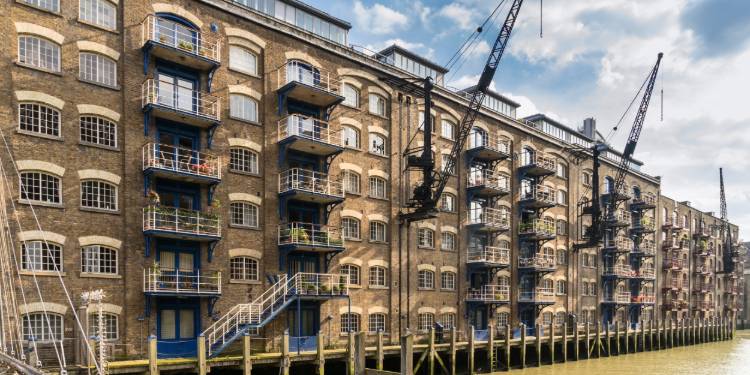
Bermondsey’s property market is one of the most varied in South East London, from the repurposed railway arches and converted warehouses of Shad Thames, to sprawling new build developments.
But it covers such a large area that you might not realise just how many property types are on offer. Despite the fact that Bermondsey was badly affected by the Blitz, house hunters will find neat Victorian terraces and historic shopfronts. Look further and you’ll find post-war council estates, and a growing number of large-scale new build schemes that are firmly up-to-date.
Whether you’ve fallen in love with Shad Thames, want a Bermondsey lifestyle without the premium prices, or you’re an investor attracted by the Old Kent Road and former Peek Freans site regeneration, you might just find what you’re looking for. But it helps to know your way around. In this article, we explain how the area breaks down. Read on to explore the riverside conversions around London Bridge and Tower Bridge Road, the conservation areas, and the less uniform streets offering a Bermondsey address on a lower budget.
| Property type | Typical period | Typical tenure | Approximate price range |
|---|---|---|---|
| Victorian terrace | 1860s to 1900s | Freehold | £700,000 to £900,000+ |
| Converted warehouse / loft flat | 1980s to 2000s conversions | Leasehold | £500,000 to £900,000+ |
| Period purpose-built flat | 1890s to 1930s | Leasehold | £400,000 to £600,000 |
| Post-war flat / estate | 1950s to 1970s | Leasehold / shared ownership | £300,000 to £500,000 |
| New build apartment | 2010s to present | Leasehold | £450,000 to £750,000+ |
Property hunters looking for a traditional terraced house in Bermondsey shouldn’t overlook the streets between Old Kent Road and Jamaica Road, and near Bermondsey Street. These are largely two-storey stock brick terraces are modest by Edwardian standards, but many have been extended. They can also showcase beautifully restored features. Sold prices for terraced houses averaged £779,000 over the last year by Rightmove’s 2025-26 figures. Unsurprisingly, in an area known for flats, comparatively rare houses can command a premium.
Flats are by far the most common property type, selling for an average of just over £480,000 across the past year, according to Zoopla. Converted warehouse lofts play a big part in Bermondsey’s identity, and it’s property market. The former leather and food-processing factories along Bermondsey Street and Tower Bridge Road were first converted for residential use in the 1980s and 1990s. The resulting high-ceiling apartments that remain sought-after to this day. These conversions are almost exclusively leasehold, and as always, buyers should check the terms carefully for service charges and expected maintenance costs.
Purpose-built flats in late Victorian and Edwardian mansion blocks, and former social housing in post-war estates, offer alternative options. Many flats sold via Right to Buy can be bought at a discount compared to equivalent privately built flats – worth noting if you’re on a budget.
Bermondsey contains several designated conservation areas, protecting the industrial heritage that’s celebrated around Shad Thames but that’s not all. You’ll find the medieval layout of Bermondsey Street, and its Georgian and Victorian commercial buildings, are carefully preserved too.
Check the relevant conservation area appraisal from Southwark Council before making an offer on a period property. It’s a good idea to seek specialist advice, as conservation is taken seriously.
It’s also worth consulting Historic England for details of Bermondsey’s listed building records, whether you’re considering buying a notable property or simply a history lover. Bermondsey is home to many listed buildings, and they are varied indeed. St Mary Magdalen Church on Bermondsey Street is Grade I listed, with its origins harking back to the 12th Century. There’s the Grade II listed Leather Market building, and Grade II* listed Butler’s Wharf, one of the largest warehouse complexes on the Thames.
These terraces were built for local workers, and can be compact by Victorian South East London standards. Look to the conservation area around Bermondsey Street for some of the finest examples. South of the Old Kent Road, you’re more likely to find replacement uPVC windows and alterations, which may reduce the property’s value.
1980s conversions around Shad Thames were among the earliest in London, and set the template. Of course, each has its own signature details – but you can find that conversion qualities varies as well. Treat each warehouse conversion as an individual case when you plan your purchase.
Purpose-built flats can be characterful and are often well-constructed, with a long-established maintenance routine. However, as with any leasehold purchase, check the full details before buying, and find out about the building’s condition and planned repairs.
Two schemes loom large on Bermondsey’s development pipeline. Pearl Yard Bermondsey is Greystar’s redevelopment of the former Peek Freans biscuit factory site in South Bermondsey. With 1,624 rental homes scheduled for delivery by 2027, 35% of which are designated as affordable, the development is designed as a build-to-rent scheme. While this means the units can’t be purchased, it could make a real impact on local amenities with a new central square, secondary school building, and retail and leisure space.
The Berkeley Group’s Bermondsey Place development launched in March 2025 on the Old Kent Road with first phase of what will eventually be 1,300 homes across twelve buildings. Its sits within the broader Old Kent Road Opportunity Area, which has attracted around £10 billion of proposed investment. Buyers considering off-plan purchases here should factor in the extended construction timeline across three phases, and the potential for further Old Kent Road to change the area’s character in future.
Infrastructure changes are on the horizon too, though still very much a work in progress. The most developed of these is a proposed new Overground station at New Bermondsey on the East London Line, between Surrey Quays and Queens Road Peckham. This has planning permission granted and enabling works partially completed. If delivered, this would significantly upgrade the travel connections in South Bermondsey, and potentially add value to nearby properties. Though of course, no promises can be made and further research is essential if you are planning to buy in the area.
Outside space can be limited in Bermondsey, where properties are traditionally built close together or converted from former industrial buildings. Front gardens are a rarity, with most Victorian terraces opening directly onto the pavement. They typically have a small rear yard or garden, however, and sometimes a side return that’s either open to the elements of glazed over to extend the kitchen.
Naturally, warehouse conversions and purpose-built flats offer either small Juliet balcony or simply a communal roof terrace, though some offer no attached outside space. Post-war estates vary, but some have a well-maintained communal green. Find out early on if a residents’ garden is important to you.
However, recent developments are another matter. Landscaping, leisure and play areas are an integral part of the new build schemes at The Bermondsey Project and Bermondsey Place under their planning obligations. Some units offer private balconies too.
If you drive, be aware that off-street parking is scarce in the northern part of Bermondsey, with controlled parking zone (CPZ) restrictions apply across most streets. CPZ G covers the north, with CPZ SB across South Bermondsey and CPZ SEB in South East Bermondsey, as of July 2026. Further south, some terraces do offer a driveway with a dropped kerb, but check directly before you buy or rent.
Bermondsey’s Victorian solid-wall terraces, 1980s and 1990s warehouse conversions and post-war concrete-frame estates can carry specific survey risks. Before exchanging, buyers should find out more as common issues like damp or roof deterioration can be expensive to repair, and are best uncovered early.
With such a large proportion of flats in the area, Bermondsey buyers also need to understand their lease terms in detail. Service charges can soon add up, not to mention, short leases can be expensive to extend.
A full RICS Level 2 or Level 3 Building Survey, commissioned independently from a RICS-registered surveyor, is the appropriate tool for any period or converted property in this area. Do not rely on a mortgage valuation as a substitute.
Flats are the most common property type in Bermondsey by far, ranging from Victorian mansion blocks and conversions, to warehouse lofts, to post-war purpose-built blocks and new build apartments. However, buyers can find Victorian terraced houses around Bermondsey Street and south of Jamaica Road.
Yes, Bermondsey has several designated conservation areas covering the Bermondsey Street area, Tower Bridge Road, and Shad Thames. Each imposes restrictions on external alterations, window replacements, and extensions. As such, buyers should confirm with the London Borough of Southwark if their property falls within a conservation area boundary before assuming any works will be permitted.
Victorian terraced houses are typically freehold but the majority of Bermondsey property is leasehold, with many properties being conversions of purpose-built flats. Buyers of leasehold flats should always check the lease length, ground rent and service charge history before exchanging contracts to avoid costly oversights.
The key considerations are lease length, service charge level, and the condition of the shared building fabric. Request three years of service charge accounts, check the reserve fund position, and commission a full building survey that specifically addresses the conversion’s structure and communal elements, as older 1980s schemes can need more maintenance.
Supply looks set to increase, with large-scale schemes at the former Peek Freans site and along the Old Kent Road will add significant housing supply over the next five to ten years. However, the proposed new Overground station at New Bermondsey, if delivered, could add value to the surrounding area. It’s a complex picture, and requires careful calculation.

We’re here to help with any property-related queries you may have


Bermondsey is one of inner London's most compelling postcodes right now - and it's changing fast. From the thriving craft breweries along...

Two streets in Bermondsey can sit five minutes apart, look nearly identical, and sell for £100,000 more on one than the other. The differ...

Discover the fascinating world of London Bridge and the distinctive properties that surround it! From historic warehouses transformed int...