Southwark Selective Licensing: Guide for Landlords
If you are a landlord in Southwark, you may be required to obtain a licence depending on your property type and the ward your property is...

Ensuring that rental properties are safe for tenants to live in an essential responsibility for private landlords. Tenant health and safety is protected by many sets of legislation, including the Electrical Safety Standards in the Private Rented Sector (England) Regulations 2000.
While some regulations and responsibilities, such as EICR requirements for landlords, are fairly straightforward, there are other areas that are less clear. For example, a question we often get asked from Wapping, Canada Water and Waterloo landlords is whether PAT testing is a legal requirement.
If you are wondering whether you should be conducting PAT testing for your south east London buy-to-let, we’ve got the answers you’re looking for.
PAT (Portable Appliance Testing) is a set of testing processes used to identify any potential electrical safety hazards. The checks include both visual inspection and electrical testing on portable appliances and the tests are performed by competent professionals, typically qualified electricians.
PAT testing is different to EICR, which focuses on the inspection of electrical installations rather than portable appliances – and which is the more critical of the two electrical certificates for landlords. We explain the differences in detail further on in this article.
The appliances that are usually checked in residential properties include any type of appliance that is plugged in, and they are not necessarily ‘portable’ in the sense that they are regularly moved around. For example, white goods including washing machines, fridges, freezers and dishwashers may be fixed or stationary, but they are plugged into the electrical supply.
Other appliances that can be PAT tested included TVs, microwaves, lamps and kettles. If you are providing any of these appliances with your rental property, arranging PAT testing will help to prevent electrical fires and other hazards in the property.
Visual checks include looking for any loose wires and any signs of heat damage on plugs. Electrical tests involve using a tool called a Portable Appliance Tester, which measures earthing continuity, insulation resistance and lead polarity.
Once the inspect and test process is completed, each item will have a pass or fail, and a label will be displayed on each type of equipment that has been tested, showing the date of the test, the result and the date of expiry.
Want to be a more informed landlord? PAT testing sits alongside other safety checks like smoke alarms and a thorough house inspection checklist.

The simple answer is no, it is not a legal requirement for landlords to complete PAT testing for their rental properties. However, there are two main reasons for landlords to get PAT testing done:
The Landlord and Tenant Act 1985 legislation stipulates that landlords must ensure the safety of any electrical items they provide in their property. So, while the law does not state that PAT testing is mandatory, getting PAT testing completing helps to ensure compliance with the electrical safety regulations.
Electrical issues are one of the most common causes of domestic fires in the UK and PAT testing will give landlords peace of mind that the electrical appliances in the property are safe to use. As well as protecting tenants from potential fires or electrical injuries, PAT testing will also help to prevent property damage caused by electrical fires and burns.
In some cases, the local authority may require the landlord to arrange PAT testing as a condition of granting a licence. For example, under the conditions of granting an HMO licence, the local council will sometimes request evidence of PAT testing completed by a competent professional.
It is also best practice to check appliances on an annual basis to help identify any issues that could potentially be a hazard. For properties where appliances are getting used by multiple people on a regular basis, faster wear and tear will occur. Therefore, regular PAT testing is highly recommended, even if it is not a licence condition.
While not a specified legal requirement, PAT testing will often be a condition of obtaining an HMO licence. Landlords of HMO properties would need to provide evidence of PAT testing to the local authority before an HMO licence is issued. Where an HMO licence is required, a landlord cannot legally rent the property out as an HMO without the required licence.
Landlords face prosecution if they fail to obtain an HMO licence when required, which could include unlimited fines.
Safety compliance is tightening under the Renters’ Rights Act 2026, and landlords in areas with Southwark selective licensing face additional scrutiny.
The types of appliances that will generally be included in PAT testing are:
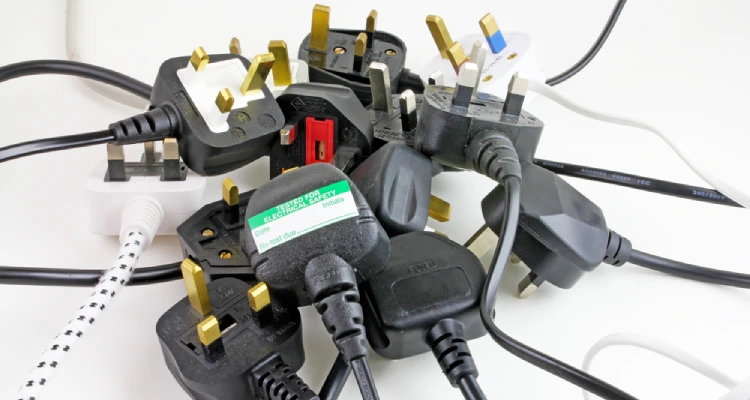
Any appliances that are battery powered such as cordless drills and cordless vacuum cleaners do not require PAT testing as they do not run from the electrical supply.
PAT testing and EICR both involve electrical checks but are significantly different. An EICR (Electrical Installation Condition Report) is legally required for all landlords of private rented properties. The EICR includes checks of all the wiring, sockets and switches that are within the property.
A qualified electrical completes an EICR and it is valid for 5 years. A copy is provided to the landlord and the tenant should also be provided with a copy, either when they move in or when the latest EICR is completed during a tenancy. This is another part of a landlord’s legal obligations.
While PAT testing is not specifically a legal requirement, an EICR is a legal requirement and failure to obtain one could result in the landlord receiving a fine of up to £30,000.
PAT testing should be completed by a competent person, which includes qualified electricians or anyone else with suitable electrical skills and knowledge. Some self-managing landlords choose to do PAT training courses so that they can perform the testing themselves.
There is no specified timeframe for getting PAT testing done but Class 1 electrical appliance PAT tests are usually valid for 12 to 24 months. It is recommended that landlords of private rented accommodation arrange PAT testing on an annual basis, especially in properties where there is frequent use of the electrical appliances.
PAT testers can either charge per item (usually £1 to £3 per appliance) or an hourly rate of around £40 to £60. The cost of PAT testing in London will generally be a bit higher than other areas of the UK.
If you are a landlord in Vauxhall, Bermondsey or Borough, we can help with making sure your property complies with all the relevant regulations. Contact us to find out more about our letting services.


If you are a landlord in Southwark, you may be required to obtain a licence depending on your property type and the ward your property is...

Becoming a landlord can be very profitable, but you must pay tax on rental income. To avoid penalties, you must understand your tax oblig...

What are a London landlord’s repair obligations in 2026? Landlords have long had obligations to make repairs under the Landlord and Tenan...