Download, Free Today
Landlords, Must Have Compliance Checklist

As a landlord, you must comply with many different regulations, including the Smoke and Carbon Monoxide Alarm (Amendment) Regulations 2022, which has applied since the 1st October 2022. Non-compliance can result in significant fines and imprisonment in severe cases, so it is essential to understand and meet your legal requirements as a landlord.
Smoke and carbon monoxide alarm requirements can vary across different local authorities, particularly for HMOs (Houses in Multiple Occupation). As well as complying with the national regulations, you should check the requirements for the relevant local authority.
It’s coming soon and you need to prepare your property business. Get ahead of the curve with our FREE guide so you stay compliant & avoid fines.
You will find these requirements listed on the respective council websites. For example, for properties in Shad Thames and Surrey Quays check the Southwark Council website, and for Vauxhall, refer to the Lambeth Council website.
We’ve answered some of the key questions we get asked from private rented sector landlords about smoke and carbon monoxide alarm compliance:
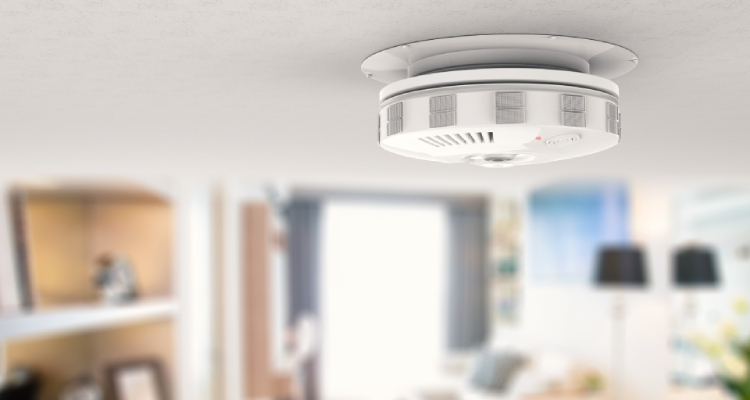
At least one smoke alarm must be installed on each storey of rental properties where a room is used as living accommodation. There are no specifications regarding the type of smoke alarm that should be installed. Still, an alarm with a long-life 10-year battery is recommended.
Landlords must comply with the Smoke and Carbon Monoxide Alarm (Amendment) Regulations 2022, which became law on 1st of October 2022.
The regulations state that carbon monoxide alarms are required in rooms with solid fuel-burning appliances such as a coal fire or wood-burning stove. The most recent amendment to the regulations included an extension requiring carbon monoxide alarms to be installed in rooms with fixed combustion appliances such as a boiler, warm air heater, or water heater (excluding gas cookers).
The rule changes have been introduced to improve tenant safety in rental properties, and local authorities will be conducting spot checks on rental properties to verify landlord compliance.
Suppose you are a private landlord in England renting out accommodation to tenants. If so, you must comply with the smoke and carbon monoxide alarm regulations. This means that your properties must have smoke alarms and carbon monoxide detectors installed, and you must ensure that they are working correctly on the first day of a new tenancy.
The smoke alarm and carbon monoxide detector testing should form part of the inventory, so that you can provide evidence that you tested the alarms. Then, the tenant should sign the inventory to confirm that the appliances and alarms are all working. Documenting this information should help if the local authority requests proof that you completed the required checks at the beginning of the tenancy.
After you have completed the inventory and the tenant moves into the property, it is their responsibility to regularly check that smoke and carbon monoxide alarms are in working order. However, an amendment to the regulations now states that the landlord must arrange for an alarm to be repaired or replaced if the tenant reports that it is not working.
Yes, the regulations require alarms to be fitted in rental properties with existing tenants and any new tenancies. If your rental properties are not equipped with working smoke and carbon monoxide alarms, you must rectify this quickly. This ensures you’ve taken the correct steps to protect your tenants, and avoid any fines for non-compliance.
What Are The Landlords Vs. Tenant Responsibilities For Smoke Alarms?
Landlords have a legal requirement to install smoke alarms and to ensure that they are working at the beginning of the tenancy. Any faults should be reported by the tenant to the landlord, and it is the private landlord’s responsibility to replace or arrange the repair of faulty alarms.
The landlord should show the tenant how to test the alarms at the start of the tenancy so that they can regularly test alarms during the tenancy. The responsibilities are shown in the table below:
| Action | Landlord | Tenant |
| Install smoke alarms | ✔ | ❌ |
| Ensure alarms work at tenancy start | ✔ | ❌ |
| Replace broken/faulty alarm units | ✔ | ❌ |
| Test alarms during tenancy | ❌ | ✔ |
| Replace batteries (where applicable) | ❌ | ✔ |
| Report faults | ❌ | ✔ |
Want to be a more informed landlord? Smoke alarms are just one safety duty – find out whether PAT testing is a legal requirement and use a proper house inspection checklist to stay on top of the rest.
No specific type of alarm is stipulated in the smoke alarm regulations, so landlords can install either battery-powered or mains-powered alarms. The guidance provided on the government website recommends that the landlord chooses an alarm that meets the needs of the building and tenant, and it should comply with British Standards BS 5839-6.
It is also advisable to have a combined smoke and heat alarm installed just outside a kitchen, as these are less sensitive to false alarms when cooking.
Smoke alarms in your rental property should be installed on every storey used as living accommodation. The most suitable place to install smoke alarms is usually the ceiling in the hallway, landing or other circulation space.
You must install a carbon monoxide alarm in every room used as living space if the room has a fixed combustion appliance. The ideal place to install the CO2 alarms is within 3 metres of the appliance, at head height on a wall or a shelf.
Some types of tenancies are exempt from the smoke and carbon monoxide regulations, such as accommodation related to healthcare provision, care homes, student halls of residence and hotels.
If the tenant shares the property with the private landlord or the landlord’s family, the regulations do not apply. For accommodation to be considered as shared with the landlord, they must share living space such as a kitchen or living room.
Unlicensed HMOs must meet the smoke and carbon monoxide alarm regulations, but licensed HMOs must follow the rules stipulated in the Housing Act 2004 (which has had a similar amendment applied).
Yes, the local authority performs spot checks to verify whether landlords for privately rented properties meet the smoke and carbon monoxide alarm regulations. If a rental property does not have alarms fitted, the local authority issues a remedial notice that gives the landlord 28 days to rectify the issue. If corrective action is not completed within 28 days, the landlord could be issued a fine of up to £5,000.
As a landlord, your requirement for testing alarms is on the first day of the tenancy. After this, the tenant is responsible for testing the alarms, but you may still want to check the alarms yourself. If your tenant makes it difficult to arrange access for an alarm test, you should remind them that the check is for their health and safety. Explain to them that checking the alarms could help protect them from fire and carbon monoxide poisoning.
Suppose you cannot access the property to check the alarms are working. In that case, you should ensure you have evidence you’ve contacted the tenants in a letter or an email. If the local authority approaches you, they should accept the paper trail as proof you have tried to meet your legal obligations.
As a landlord, you have many other responsibilities, including the following fire safety responsibilities:

Landlords must ensure that tenants living in their property can always access a safe and reliable escape route. These can be external or internal fire escapes, and they must be accessible from every floor and every room in the property.
Suppose the landlord provides any furniture and furnishings. In that case, they must ensure the items meet fire safety standards, including that they are made from fire-resistant materials (this should be displayed on the manufacturer’s label). This includes settees and curtains, with the only exclusions being mattresses, bed bases, pillows, cushions and bed covers.
The provision of fire extinguishers and fire blankets is mandatory in large HMOs. Landlords of rented homes that are not HMOs are also recommended to provide fire extinguishers and blankets. However, it is not legally required in the fire safety regulations.
Landlords are responsible for ensuring periodic fire risk assessments are carried out to identify any fire risks and implement fire safety measures to reduce the risk of fire. These should be completed at least every two years and more frequently for older properties.
The Smoke and Carbon Monoxide Alarm (England) Regulations 2015 apply to landlords of rental properties in England. If you are a landlord in Wales, Scotland or Northern Ireland, you should check the guidance for smoke alarm and carbon monoxide detector regulations on your government’s website. This is because rules differ slightly between the governments. Also, have a read of our article on landlord legal responsibilities to help you understand health and safety requirements in more detail.
Safety standards are evolving under the Renters’ Rights Act 2026, and areas with Southwark selective licensing often have extra requirements too.
All residential rental properties are legally required to have smoke alarms fitted, including HMOs, houses, flats and social housing.
There is also a legal requirement for landlords in the private rented sector to ensure carbon monoxide alarms are installed in properties with a fixed combustion appliance. These appliances include gas boilers, open fires and wood burners but excludes gas cookers.
If new appliances are installed that have a combustion risk, and there is not currently a carbon monoxide alarm fitted, then the landlord is responsible for having alarms installed in the required rooms.
The following documents should be kept as evidence of compliance:
– Inventory check-in detailing the location of alarms
– Installation records/invoices from installer
– Maintenance and repair records
– Gas safety certificate
– For HMOs, additional documents are also required to demonstrate compliance with licensing conditions
The landlord is responsible for testing alarms at the start of the tenancy, then ethe tenant should test them during the tenancy.
Maintaining the alarms is also the responsibility of the landlord but the tenant must report faults to the landlord so that they are aware of any required repairs. Generally, tenants are responsible for replacing batteries during the tenancy, but the landlord may do this during inspections.
If landlords fail to meet their responsibilities under the Smoke and Carbon Monoxide Alarm regulations, they can be fined up to £5,000, have their licence revoked and may be served with a Rent Repayment Order by the local authority.
If you are a landlord in London Bridge, Waterloo or Bermondsey and would like some advice on smoke and carbon monoxide alarm compliance or information regarding any other landlord responsibilities, contact our team today.

We’re here to help with any property-related queries you may have


If you are a landlord in Southwark, you may be required to obtain a licence depending on your property type and the ward your property is...

Becoming a landlord can be very profitable, but you must pay tax on rental income. To avoid penalties, you must understand your tax oblig...

What are a London landlord’s repair obligations in 2026? Landlords have long had obligations to make repairs under the Landlord and Tenan...




Lee Whitelock
Director
Being a landlord in London can be confusing. How do you make sure you are compliant?